AI-Powered Coding: Revolutionizing Software Development

Here’s a comprehensive article based on your requirements:

AI-Powered Coding: Revolutionizing Software Development

Introduction: The Dawn of AI in Programming

In recent years, the world of software development has witnessed a paradigm shift with the integration of artificial intelligence (AI) into programming practices. This fusion of AI and coding, often referred to as “programming with AI,” is reshaping the landscape of software development, offering unprecedented levels of efficiency, productivity, and innovation. As we stand on the cusp of a new era in technology, it’s crucial to understand how AI is revolutionizing the way we write, debug, and optimize code.

AI-Powered Coding Tools and Platforms

The rise of AI in programming has given birth to a new generation of coding tools and platforms. These AI-assisted coding environments are designed to streamline the development process and augment human capabilities. Some of the most popular tools include:

GitHub Copilot

Developed by GitHub in collaboration with OpenAI, Copilot is an AI pair programmer that suggests code snippets and entire functions based on context. It uses machine learning to understand the developer’s intent and generates relevant code in real-time.

TabNine

TabNine is an AI-powered code completion tool that works across multiple programming languages. It learns from your coding patterns and provides contextually relevant suggestions, significantly speeding up the coding process.

IBM Watson for Developers

IBM’s Watson offers a suite of AI tools for developers, including natural language processing capabilities that can be integrated into applications to enhance user interactions and data analysis.

Machine Learning Algorithms in Code Generation

At the heart of AI-assisted programming are sophisticated machine learning algorithms that power code generation. These algorithms analyze vast repositories of code to learn patterns, best practices, and coding conventions. The most prominent approaches include:

Transformer Models

Large language models like GPT (Generative Pre-trained Transformer) have been adapted for code generation. These models can understand and generate human-like text, which translates well to programming languages.

Reinforcement Learning

Some AI coding assistants use reinforcement learning techniques to improve their suggestions over time based on user feedback and acceptance rates of proposed code snippets.

Natural Language Processing for Code Understanding

Natural Language Processing (NLP) plays a crucial role in bridging the gap between human language and programming languages. AI-powered tools can now:

  • Translate natural language descriptions into functional code
  • Generate documentation from existing codebases
  • Improve code readability by suggesting more descriptive variable names and comments

This application of NLP in programming is making coding more accessible to non-technical users and improving collaboration between developers and other stakeholders.

AI-Driven Code Optimization and Debugging

One of the most promising applications of AI in software development is in the realm of code optimization and debugging. AI algorithms can:

  • Analyze code for potential bugs and security vulnerabilities
  • Suggest performance optimizations based on runtime analysis
  • Automate the process of refactoring code for improved maintainability

Tools like DeepCode and Snyk use AI to scan codebases, identifying issues that human developers might overlook and suggesting fixes in real-time.

Ethical Considerations and Limitations

While the benefits of AI in programming are substantial, it’s important to address the ethical considerations and limitations:

Code Ownership and Intellectual Property

As AI generates more code, questions arise about ownership and licensing of AI-generated code. This is particularly relevant when using tools that learn from public repositories.

Over-reliance on AI

There’s a risk that developers might become overly dependent on AI tools, potentially limiting their understanding of fundamental programming concepts.

Bias in AI Models

AI models trained on existing codebases may perpetuate biases present in those sources, potentially leading to less diverse or inclusive code practices.

Future Trends and Predictions

The future of programming with AI looks promising and is likely to include:

  • More sophisticated code generation capabilities, potentially writing entire applications from high-level descriptions
  • Enhanced integration of AI assistants in Integrated Development Environments (IDEs)
  • AI-driven project management and resource allocation in software development
  • Increased focus on explainable AI to help developers understand AI-generated code

Conclusion: Embracing the AI-Powered Future of Programming

As we look to the future, it’s clear that AI-powered coding is not just a passing trend but a fundamental shift in how software is developed. By embracing these technologies, developers can focus on higher-level problem-solving and creativity, while AI handles more routine coding tasks. However, it’s crucial to approach this new era with a balanced perspective, leveraging AI as a powerful tool while maintaining human oversight and ethical considerations.

The synergy between human creativity and AI efficiency promises to unlock new possibilities in software development, potentially leading to more innovative, reliable, and accessible technology solutions. As we continue to explore the potential of programming with AI, we stand on the brink of a new chapter in the history of software development – one where the boundaries of what’s possible are constantly expanding.
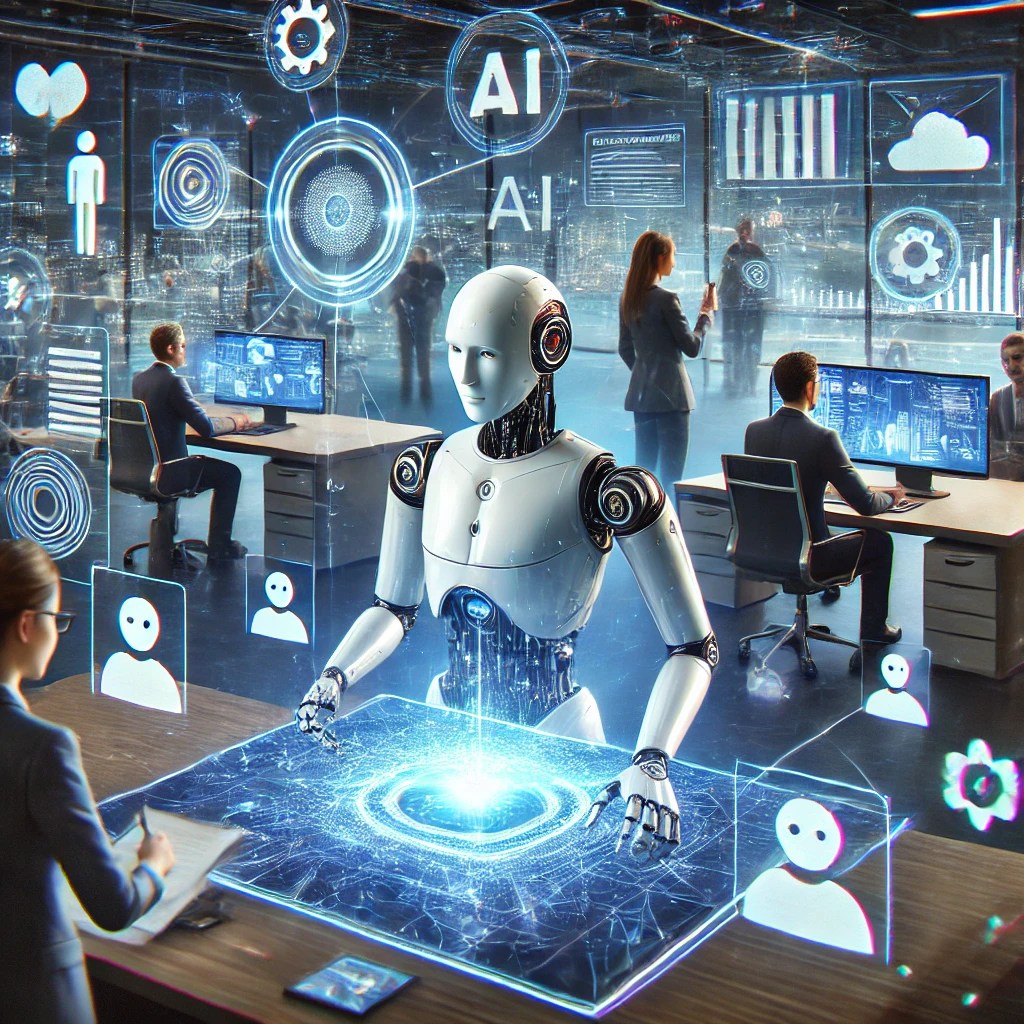

The Upcoming Wave of Automation: What It Means for Your Career

A new wave of automation is upon us, powered by Large Language Models (LLMs) like GPT and other advanced AI technologies. These models have grown exponentially in their capabilities, thanks to breakthroughs in machine learning, data processing, and neural networks.

This isn’t just about automating routine tasks. LLMs can now handle complex work like generating content, coding, analyzing data, and even providing customer service. The driving force behind this shift is simple: businesses are realizing that AI can improve efficiency, reduce costs, and unlock new levels of innovation.

But with this massive change comes real concerns about job displacement. As LLMs automate more tasks, some jobs are at higher risk of being replaced. Let’s talk about how this automation might affect your career and what you can do to stay ahead of the curve.

💡 Prepare to adapt. 💡 Leverage LLMs to your advantage. 💡 And never underestimate the value of human skills.

Several factors can determine how automation affects your career:

  • How adaptable are your skills? The key to thriving in the LLM era is continuous learning. Are you willing to upskill and adopt new technologies that enhance your work rather than replace it?
  • How much can you leverage AI? The future belongs to those who can use LLMs to boost their creativity and productivity, not those who fear them. AI can enhance, not replace, your expertise—especially when used strategically.

Careers at High Risk of Automation:

  • Administrative Assistants: Tasks like scheduling, data entry, and basic document creation can now be automated by AI systems.
  • Customer Service Representatives: With AI chatbots becoming more conversational and intuitive, repetitive customer queries are being handled by LLMs.
  • Data Entry Clerks: The ability of LLMs to process and organize data with high accuracy means fewer hands-on data entry roles.
  • Content Writers for Basic Topics: LLMs can already write articles, blogs, and reports on straightforward topics, potentially reducing the demand for entry-level writers.
  • Translators: AI has made significant strides in real-time language translation, minimizing the need for human translators for basic content.

If your role falls into one of these high-risk categories, it’s worth asking yourself:

  • Am I actively learning how to work alongside AI? There are growing opportunities for those who combine LLM tools with their unique talents.
  • Do I need to transition to a more future-proof career? Certain industries may change faster than others, but human creativity, empathy, and complex problem-solving remain irreplaceable.

It may be uncomfortable to face the idea of job transitions. But staying in a role that could soon be obsolete is much more daunting.

Instead of worrying about job loss due to LLMs, ask yourself these questions:

  • If my current job could be automated, how can I adapt my role to focus on higher-value tasks?
  • If I have to transition careers, so what? Could a new role help me expand my skills and tap into new potential?
  • If I have to upskill, is there a path to combine AI with my expertise to stay competitive?

Now imagine the upside:

  • You learn to leverage LLMs to be more efficient and innovative at work.
  • You move into a career where AI amplifies your abilities rather than limiting them.
  • You stay ahead of the curve, positioning yourself as an expert in human-AI collaboration.

Automation is changing the workplace, but it doesn’t have to be a threat. With the right mindset, LLMs can be the tools that help you reach new heights in your career.

Follow me for more tips and advice on navigating the future of work, and share if you found this helpful.

Top Ten American Scientists

Top Ten American Scientists: A Testament to the Power of Hard Work

Scientist

In a world where the pursuit of knowledge and scientific advancements can transcend boundaries, American scientists have played a pivotal role in shaping the world we live in. The United States has produced some of the brightest minds, pioneers, and visionaries who have dedicated their lives to unraveling the mysteries of the universe. This article pays homage to the top ten American scientists, highlighting their contributions and celebrating their unwavering dedication to their craft.

  1. Albert Einstein (1879-1955):

Albert Einstein, one of the greatest scientific minds to have graced the earth, is synonymous with genius and innovation. His theory of relativity revolutionized our understanding of time, space, and energy. Einstein’s unwavering pursuit of knowledge and countless hours spent pondering the complexities of the universe led him to unlock profound revelations that continue to shape modern physics.

2. Thomas Edison (1847-1931):

Thomas Edison was an American inventor and businessman who held a record-breaking 1,093 patents. His most famous invention, the practical electric light bulb, transformed the way we illuminated our world. Edison’s relentless determination to find solutions, often involving thousands of failed attempts, serves as a shining example of the power of perseverance and hard work.

3. Marie Curie (1867-1934):

While not originally American, Marie Curie’s contributions to science have left an indelible mark on American scientific progress. As a pioneering physicist and chemist, Curie’s groundbreaking research on radioactivity earned her two Nobel Prizes in different scientific fields. Her tireless dedication to her research while facing numerous obstacles is a testament to the importance of resilience and a never-ending pursuit of knowledge.

4. Carl Sagan (1934-1996):

Carl Sagan, an American astrophysicist and science communicator, made significant contributions to space exploration and cosmology. His work on the Voyager spacecraft missions, combined with his ability to make complex scientific concepts accessible to the public, fostered a deep curiosity and fascination with the cosmos in millions of people worldwide. Sagan’s commitment to sharing knowledge shows how hard work can ignite a passion for learning in others.

The First Steps to Accomplish Anything

The First Steps to Accomplish Anything

Have you ever felt overwhelmed by a goal or task you want to achieve? Whether it’s a personal project, a career milestone, or a life-changing decision, taking the first steps can often be the most daunting part. But fear not, because in this blog post, we will explore the key strategies and mindset shifts to help you accomplish anything you set your mind to.

1. Set Clear and Specific Goals

The first step towards accomplishing anything is to define your goals. Without a clear target in mind, you will struggle to make progress. Take some time to reflect on what you want to achieve and make your goals specific, measurable, achievable, relevant, and time-bound (SMART). By setting clear goals, you create a roadmap to success and increase your chances of accomplishing them.

2. Break it Down into Smaller Tasks

Once you have your goals defined, it’s time to break them down into smaller, manageable tasks. Often, the sheer magnitude of a goal can be overwhelming, leading to procrastination or a sense of paralysis. Breaking it down into smaller, actionable steps allows you to tackle each task one at a time, making the journey towards your ultimate goal less daunting.

3. Take the First Step, No Matter How Small

It’s easy to get caught up in planning and strategizing, but taking action is what truly moves you forward. Remember, the first step doesn’t have to be momentous or groundbreaking; it just needs to be taken. By taking that first step, you create momentum and build confidence, propelling yourself towards accomplishing your goals.

4. Embrace Failure as a Learning Opportunity

Failure is an inevitable part of any journey towards accomplishment. Instead of fearing it, learn to embrace failure as a valuable learning opportunity. Shift your perspective and see setbacks as chances to grow, improve, and refine your approach. Understand that setbacks are not barriers but stepping stones towards success.

5. Seek Support and Accountability

Accomplishing anything meaningful is rarely a solo endeavor. Surround yourself with a supportive network of friends, family, or like-minded individuals who can provide guidance, encouragement, and accountability. Share your goals with them and regularly update them on your progress. Having someone to celebrate your victories with and to hold you accountable in moments of doubt can make a significant difference in your journey towards accomplishment.

6. Maintain Consistency and Perseverance

Work Ethics and Sense of Accountability in the Age of Ai

Work Ethics and Sense of Accountability in the Age of AI

In today’s modern world, artificial intelligence (AI) has become an integral part of various industries. From automated customer service chatbots to self-driving cars, AI technology has revolutionized the way we work. However, with the rise of AI, it is crucial to maintain a strong work ethic and a sense of accountability. This article explores the significance of work ethics and accountability in the age of AI.

Understanding Work Ethics

Work ethics encompasses a set of principles and values that guide individuals’ behavior and attitudes towards work. It defines how individuals conduct themselves in a professional environment and involves integrity, honesty, responsibility, and dedication to work. As AI becomes more prevalent in the workplace, it is important for employees to uphold these work ethics.

Maintaining Accountability

Accountability is the act of taking responsibility for one’s actions and decisions. In the age of AI, accountability holds even greater importance. AI systems, although highly advanced, are still designed and programmed by humans. Therefore, it is essential for individuals to take responsibility for the outcomes produced by AI technology.

Accountability in the age of AI can be achieved by regularly evaluating and monitoring AI systems for performance and accuracy. It is crucial to ensure that AI algorithms are functioning as intended and any potential biases are addressed. Moreover, transparency is key to maintaining accountability. Organizations should strive to provide clear information about the capabilities and limitations of AI systems, enabling stakeholders to understand and trust the technology.

Ethical Considerations in AI Development and Implementation

As AI technology continues to advance, ethical considerations become increasingly significant. Developers and organizations must uphold ethical standards and ensure that AI systems are designed and utilized responsibly. This includes addressing issues such as privacy, security, and the impact of AI on the job market.

One of the crucial ethical concerns surrounding AI is the potential for bias. AI algorithms are trained using large datasets, and if these data are biased or contain discriminatory information, the AI system may replicate and amplify those biases. To avoid this, developers should ensure diverse and representative datasets for training AI algorithms and incorporate fairness and transparency into the design process.

Enhancing Work Ethics in the Age of AI

To enhance work ethics in the age of AI, organizations and individuals need to take certain measures. Firstly, organizations should foster a culture of transparency and open communication that encourages employees to ask questions and express concerns about AI technology. This will promote a sense of accountability and ensure ethical decision-making.

Secondly, continuous learning and upskilling are essential to stay relevant in the rapidly evolving world of AI. Individuals should proactively seek opportunities to understand AI technology and its ethical implications. This could be done through attending workshops, participating in online courses, or joining professional communities focused on AI ethics.

Lastly, regular discussions and forums should be organized to address ethical dilemmas associated with AI. These discussions can help employees understand the potential risks and challenges of AI technology and find ethical solutions. By involving all stakeholders in decision-making processes, organizations can foster a sense of ownership and accountability.

Conclusion

While AI technology brings numerous benefits and efficiencies to the workplace, it is vital to maintain work ethics and a sense of accountability. By upholding ethical standards, organizations can ensure that AI systems are developed responsibly, avoiding biases and discriminatory outcomes. Moreover, fostering a culture of transparency and open communication will empower individuals to take responsibility for their actions and make ethical decisions. In the age of AI, work ethics and accountability must go hand

Navigating the AI Revolution: A Tech Enthusiast’s Journey in Product Management

As an experienced product manager and tech enthusiast, my recent journey through today’s high-tech, digital product landscape has led me to one critical insight: we must adapt to thrive. The catalyst behind this necessary transformation is the profound impact of Artificial Intelligence (AI). As an MBA graduate and a veteran in tech product management, I’ve witnessed firsthand how AI is reshaping the realm of product management, and I’m eager to share some key observations from my experiences.

AI isn’t just emerging—it has fully arrived, disrupting countless industries, including the field of product management. Its influence extends across the entire product lifecycle, from the ideation stage, to development, and through to the post-launch phase. AI’s transformative power lies not just in streamlining our operations but also in fundamentally altering our approach to product design with a heightened focus on the end user.

Traditionally, understanding the target audience’s needs and desires required exhaustive human-led market research. Today, AI steps into this role, swiftly analyzing large data sets to yield a granular view of customer profiles and behaviors. This capability has dramatically changed my approach as a product manager, enabling the development of products directly aligned with customer needs and fostering personalized marketing strategies.

From a development perspective, my time in tech has taught me that roadblocks and bottlenecks are inevitable. However, AI has proven to be an excellent ally in these instances, forecasting potential issues that could disrupt our product roadmap. Product roadmaps—a cornerstone in product management—are now more dynamic than ever. We can make real-time adjustments based on AI’s predictive analytics of market trends and user feedback, reducing risks, curtailing costs, and improving overall product delivery timescales.

AI’s influence doesn’t diminish post-launch; instead, it amplifies. Tasks like user feedback analysis, pattern detection, and identifying areas of improvement used to consume a significant chunk of my time as a product manager. Now, AI accelerates these processes through advanced data analytics, expediting insights for future product updates and iterations.

Moreover, AI-infused digital products continually learn and adapt to user behavior, exemplified in recommendation engines on e-commerce platforms or personalized content on streaming services. This creates an enhanced and personalized user experience—an essential factor in an era where customer expectations are in perpetual flux.

Despite AI’s transformative capabilities, it’s crucial to remember it doesn’t replace human influence. Rather, it enhances it. Throughout my tech journey, I’ve realized that human intuition, creativity, and empathy remain indispensable in crafting truly successful and meaningful products.

In conclusion, AI isn’t simply an adjunct to product management; it’s a game-changer, revolutionizing our understanding of customers, reshaping our roadmaps, and transforming product lifecycles. As product managers, especially those of us in tech, embracing AI isn’t just advantageous—it’s essential. It elevates our strategic prowess, optimizes operations, and ultimately enables us to deliver more value to our customers. The future of product management is here, and it’s powered by Artificial Intelligence.

Product Management in The Age of Artificial Intelligence

Product Manager in today’s high-tech digital product landscape are challenged to change their mindset to adopt to the rapid changes in the world of technology that is caused by the evolutions in Artificial intelligence. For that reason, I’d like to share some insights on how artificial intelligence (AI) is redefining product management.

AI has already revolutionized several industries and the realm of product management is no exception. Its influence spans across the product lifecycle, starting from the ideation stage, moving through the development process, and extending into the post-launch phase. AI not only changes the way we manage products but also reshapes our approach towards customer-centric designs.

At the heart of a customer-centric approach is a keen understanding of the target audience’s needs and desires. We used to rely heavily on human-led market research for this, but now AI is playing a larger role. With its ability to process and analyze vast quantities of data, we are able to glean detailed customer profiles and predict their behaviors more accurately. This not only helps in developing a product fit that directly caters to the customer’s needs but also assists in crafting personalized marketing strategies.

In the development phase, AI enables us to forecast potential roadblocks and bottlenecks that might disrupt the product roadmap. Product roadmaps are key strategic documents in product management, outlining the vision, direction, and progress of a product over time. With AI, we can keep our roadmaps dynamic, making real-time adjustments based on predicted market trends and user feedback. This proactive approach helps to reduce risks, save costs, and improve the overall product delivery timeline.

The impact of AI continues post-launch too. Analyzing user feedback, spotting patterns, and identifying areas of improvement used to be time-consuming tasks. However, with AI’s advanced data analytics capabilities, we can obtain these insights in a more efficient and timely manner, informing decisions about future product updates and iterations.

Furthermore, AI-powered digital products can continually learn and adapt to user behavior, further enhancing the user experience. This is evident in recommendation engines on e-commerce platforms or personalized content on streaming services.

In a world where the customer’s expectations are constantly evolving, staying ahead of the curve is paramount. AI has proved to be an invaluable ally in this journey, providing us with tools to continually improve the customer experience, ensure product fit, and effectively manage our product lifecycle. While AI has streamlined many processes in product management, it’s critical to remember that it is a tool to aid us, not replace us. Human intuition, creativity, and empathy remain key in creating truly successful and meaningful products.

In conclusion, AI is not just an additive to product management – it is a catalyst that is transforming how we understand our customers, plan our roadmaps, and manage our product lifecycle. As product managers, embracing AI can enhance our strategic capabilities, streamline operations, and ultimately deliver more value to our customers.

Additional note:

I experimented with a new image to text tool “D-ID” to demonstrate the potential of new advancements in Ai in communicating with customers. I generates an Ai video of me reading the content above. All what I have to do is I uploaded a picture of me along with the content to be read, then it generated it. so much potential ahead of us. Here’s the video:

Blue Ocean Strategy

Source: idionomist

In a world where companies are fighting for a share of a finite market, it’s no wonder that many are looking for new ways to grow. One such way is known as blue ocean strategy.

What is Blue Ocean Strategy? Blue Ocean Strategy is a business strategy developed to create new market space (a blue ocean) and make the competition irrelevant. The theory is that businesses typically compete within existing market space (a red ocean), where industry conditions are bloody. The goal of blue ocean strategy is to create uncontested market space and make the competition irrelevant. 

Blue ocean strategy is all about creating new markets that are uncontested by your competitors. This is done by offering something new or different that your target market finds appealing. In other words, you’re creating your own market rather than competing in an existing one.

To do this, the company must create and deliver new value that creates a new market. This is done by looking at the company’s strategic canvas, which has four main elements: 

1. Key Activities 

2. Value Proposition 

3. Customer Relationship 

4. Channel 

Source : blueoceanstrategy.com

The essential tool of blue ocean strategy is the “Eliminate-Reduce-Raise-Create” (ERRC) framework, which is used to challenge the assumptions that a company has about its industry. 

The ERRC framework is used to identify new market space by looking at what a company can eliminate, reduce, raise, and create. 

Eliminate: What can we stop doing? 

Reduce: What can we do less of?

Raise: What can we do more of? 

Create: What can we start doing that we’ve never done before? 

By looking at these four areas, companies can identify new areas for growth and market expansion. 

For example, a company might eliminate the need for a sales force by selling directly to customers online. Or, a company might reduce the number of SKUs it offers in order to simplify its product line. 

The goal is to find new areas for growth that are uncontested by the competition. 

The Blue Ocean Strategy has been used by companies like Cirque du Soleil, Southwest Airlines, and Lego to find new market space and achieve incredible growth.

Positive Core Self-Evaluation

Dismantling the Nice Guy Myth” e-Guide & Podcast – Inspired Love Life  Coaching

Photo Source

core self-evaluation refers to fundamental evaluation people make of themselves which could determine their perceived worth as individuals. It predicts the ability of an individual to face challenges and difficulties. core self-evaluation is also a good indicator of whether the person will grow emotionally, mentally, financially or not. Studies show that people with positive core self-evaluation tend to achieve more than people with low core self-evaluation. A research found that “People can have high and low CSE, but we can improve our CSE, to boost both our performance and our well-being. High-CSE individuals are generally better at coping with stress, and are less prone to burnout. They’re better at learning from training, more conscientious, and good at leading and inspiring their teams. They seek out appropriate support, maintain a positive outlook, and manage multiple roles and responsibilities, in and out of work. Research in the Journal of Applied Psychology even shows that salaries rise along with CSE!” (mindtools)

There are four components to be evaluated to determine the level of core self-evaluation, wither high or low:

  1. Self Esteem: is one of the most qualities to have which is “a precious psychological resource and generally a highly positive factor in life; it is correlated with achievement, good relationships, and satisfaction. Possessing little self-regard can lead people to become depressed, to fall short of their potential, or to tolerate abusive relationships and situations.” psychologytoday
  2. Self Efficacy: or Confidence, is the optimistic self beliefs in one’s ability to achieve favorable outcomes. Your Self Efficacy is high when your belief in your ability to achieve something outweighs others’ belief that you can’t do it. It is the well of power to believe in your ability to achieve what you desire despite what others might think of you. And no, this is not arrogant. Self efficacy will boost your momentum by unlocking potentials within you. potentials  you never knew existed before. Healthy Self Efficacy Will make you start the first step, followed by the second one until you reach what you desire. It will make you say a word you never said before, and write a letter- or email- you never wrote before to someone you never approached before. It will make you utilize all possible resources to achieve your goal. Without it, your path will be difficult and lonely, and possibly without an end, there will be no light at the end of the tunnel. As Gandhi once said “Your beliefs become your thoughts. Your thoughts become your words. Your words become your actions. Your actions become your habits. Your habits become your values. Your values become your destiny.” Gandhi via Miriam Akhtar
  3. Locus of control: Locus of control is the belief that the outcomes of your life depends on internal actions, and not relying on events outside of our control. The type of Locus of control you have will influence how you react when something happens in your life. It will also determine whether you will take action or not. People with internal locus of control tend to live happier lives, make more money, and achieve more. 
  4. Emotional Stability: or Neuroticism, it refers to a person’s ability to stay stable and remain in balance despite what might have happened. People with high Neuroticism are known to have high and often negative emotions. According to Dr. Todd Grande  “Neuroticism tends to decrease as we get older”. High neuroticism can be changed by adopting new behaviors around it. Changing behaviors in a way it adopts new skills such as coping skills and learns to destress. Avoiding substances is also important for someone with high Neuroticism

There is an ongoing debate among scientists about the scope in which core self-evaluation can determine the outcome of an individual. Yet, people with high in core self-evaluations tend to be happier with their choices. That’s true when it comes to their jobs, relationships, money, and their health.

Follow me at @mohsinbazea for more insights about personal growth

Strategic Gap Analysis For Personal Goals


To achieve something you want and desire you must move from where you at toward where you want to be. Such dynamic depends on knowing your current situation, knowing your desired destination, and understanding how to get to their (or how to execute your plan). In a previous post I wrote about the art of execution and the importance of knowing how to execute. Understanding the gap between position and the desired position is important. Analyzing that gap is called GAP analyses. GAP analyses is a techniques that is used to analyses and determine steps needed to move from your current place to the desired one. If you have a goal then you should do GAP analyses to help you achieve it. It is like creating a road map to follow which can lead you to achieve what you want.

GAP analyses consist of three elements. First, understanding your real current situation. That can be done by looking at your life and asking others to help you identify your position. If your goal is to increase the level of your monthly income then you need to know how much income you are getting right now. If your goal is to publish a bestselling book then you need to know you current level of writing skills. If your goal is to become a great leader in your community then you need to understand your leadership capabilities right now. Identifying your current situation is a hard step not an easy one. It is hard because it is difficult to accept new facts about yourself that you never believe existed before. The first step is a battle with your ego, you have to win that battle so you can move forward.

Identifying the current situation is important not only because it is the first step to achieve your goal but also because without it you will not be able to move forward to your desired destination. How can finish the race if you don’t know where to start? Think about it.

The remaining two steps in GAP analyse are identifying the desired outcomes and how to get to there. I will discuss them in the following posts.

What do you think. Share your thoughts with me by commenting bellow. Follow me on Twitter and LinkedIn for more content like this.


Photo Credit